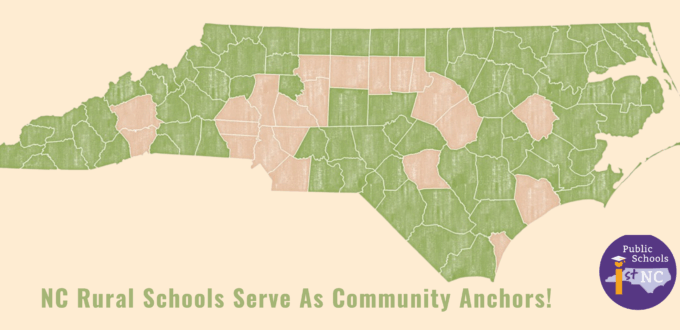
The National Rural Education Association recently published an excellent new report, Why Rural Matters 2025, documenting the needs of rural schools and students throughout America. They ranked the states on conditions of rural education from 1 (state most in need of attention/improvement in rural conditions, policies, and resources to 50 (lowest priority or least in need of attention or direction change). NC’s priority ranking was 13; only 12 other states had a higher priority ranking.
The report documents the many challenges facing our rural schools, especially the low instructional expenditures per pupil, the lack of access to support for well-being (e.g., school psychologists and counselors), inadequate pre-k programs, the lack of health insurance and primary care clinicians, and the persistent impacts of poverty and childhood hunger. Now, our state, and especially our rural communities, face deep cuts to Medicaid and SNAP.
Rural schools in NC are crucial to their community’s stability and economic health. Seventy-eight of NC’s 100 counties are classified as rural with more than 1 in 3 NC students attending a school in a rural district. Only Texas has more rural students.
Why Rural Matters 2025 makes it clear that NC rural counties are facing multiple crises in terms of educational loss, economic outcomes, unemployment, and mental health. Seventeen percent of rural NC students live in homes with household incomes below the poverty line. Nearly 14% of our rural high school students did not graduate high school compared with the national average of 89.4% rural graduation rate. (See Why Rural Matters 2025 State-by-State Results for more details.)
NC legislators must help bridge the resource gap for rural schools. Because rural counties often have a lower tax base, their schools are at a disadvantage in terms of funding, which leads to resource disparities compared to wealthier districts.
To make the struggles of rural schools worse, they are operating on last year’s funding levels because state legislators have not yet passed a state budget. Federal budget cuts are causing even more problems as some rural districts rely heavily on federal dollars to make up for shortfalls in state and local funding.
Rural schools in NC serve as a critical economic engine for their communities. The success of rural schools is directly tied to the survival of many rural communities. NC legislators must make rural education a top priority. We must continue to advocate and push for legislation that helps rural schools and gives them the resources necessary to enrich their communities and provide students with the opportunity to succeed.
